A Day at Le Cordon Bleu Paris: More Than Just Cooking
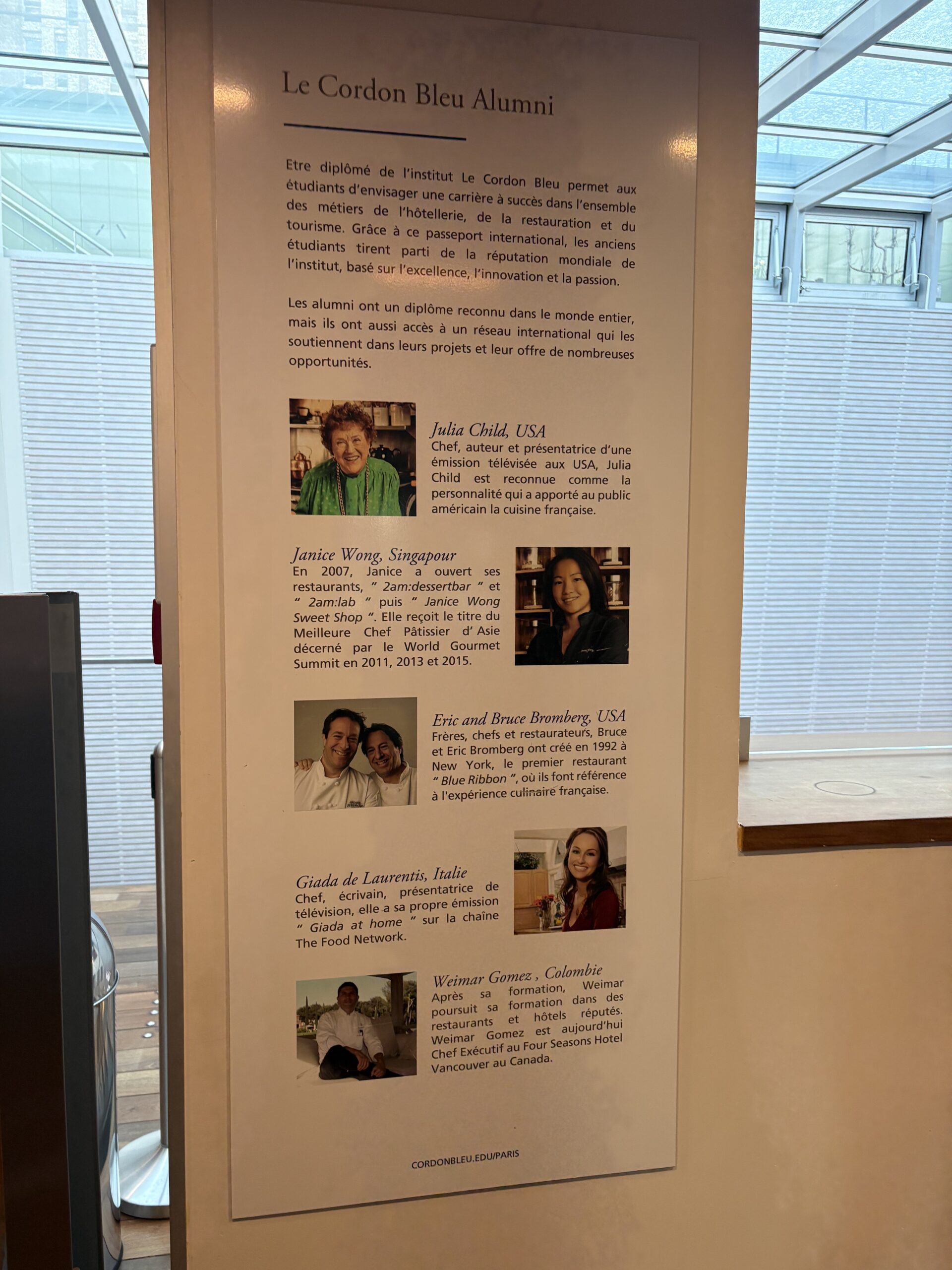
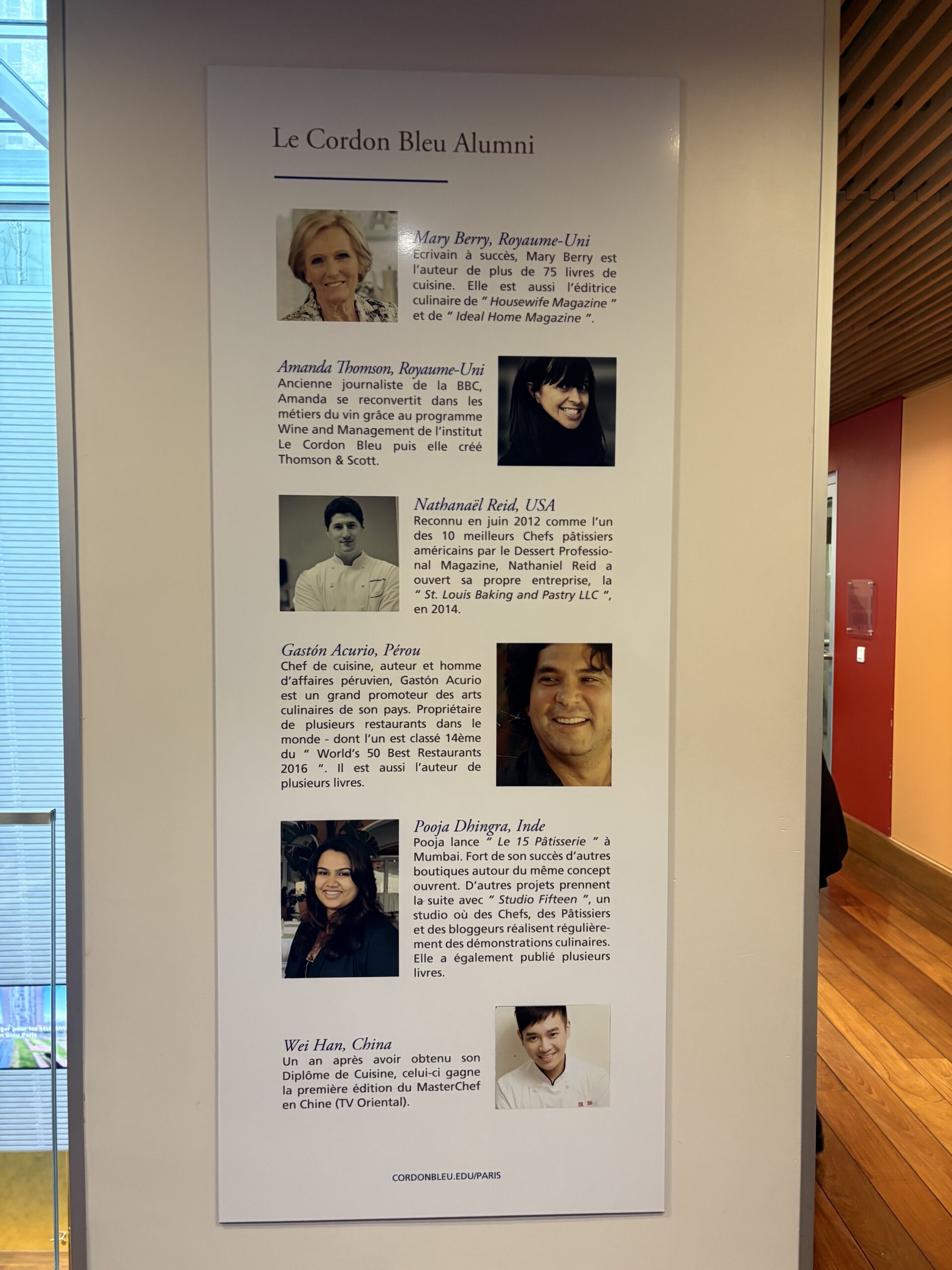
I didn’t quite know what to expect when I walked into Le Cordon Bleu in Paris. I have visited several culinary schools and loved every visit. But, this is the one that Julia Child attended so I knew that I was in for something very special.
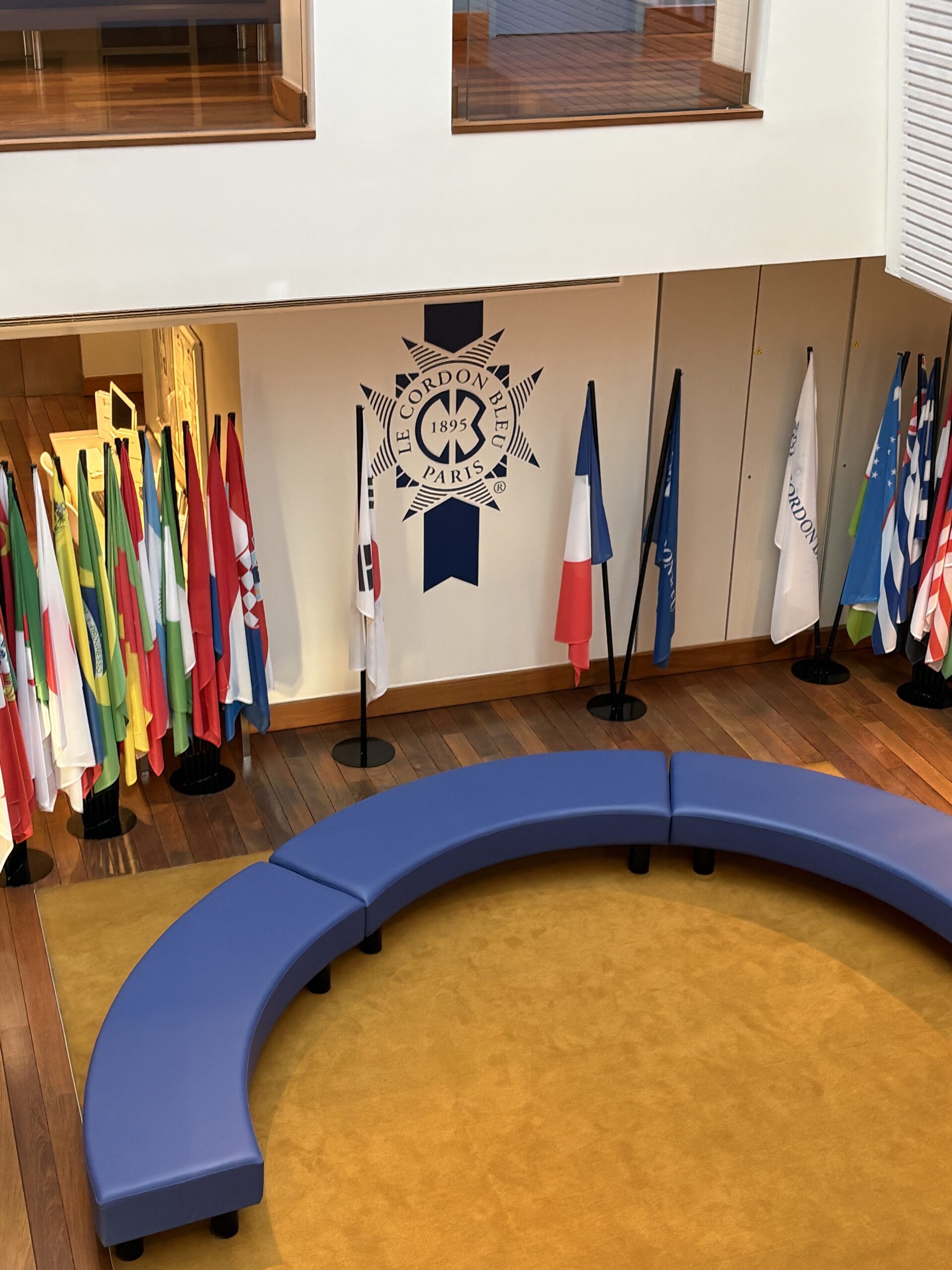
What struck me first was the global energy. Students need to be fluent in French or English and every class has an interpreter. Even though this single campus welcomes about 1,000 students each year, it didn’t feel overwhelming. Instead, it felt intentional. Classes are capped at just 16 students, and you can sense how much that matters. There isn’t a lecture hall but rather kitchens where hands-on, immersive experiences occur.
Stepping Into the Student Experience
I tried to imagine what it must feel like to be a student here. On day one, you are handed a uniform and a kit filled with professional tools. It’s a small detail, but it felt symbolic, like crossing a threshold from enthusiast to serious practitioner.
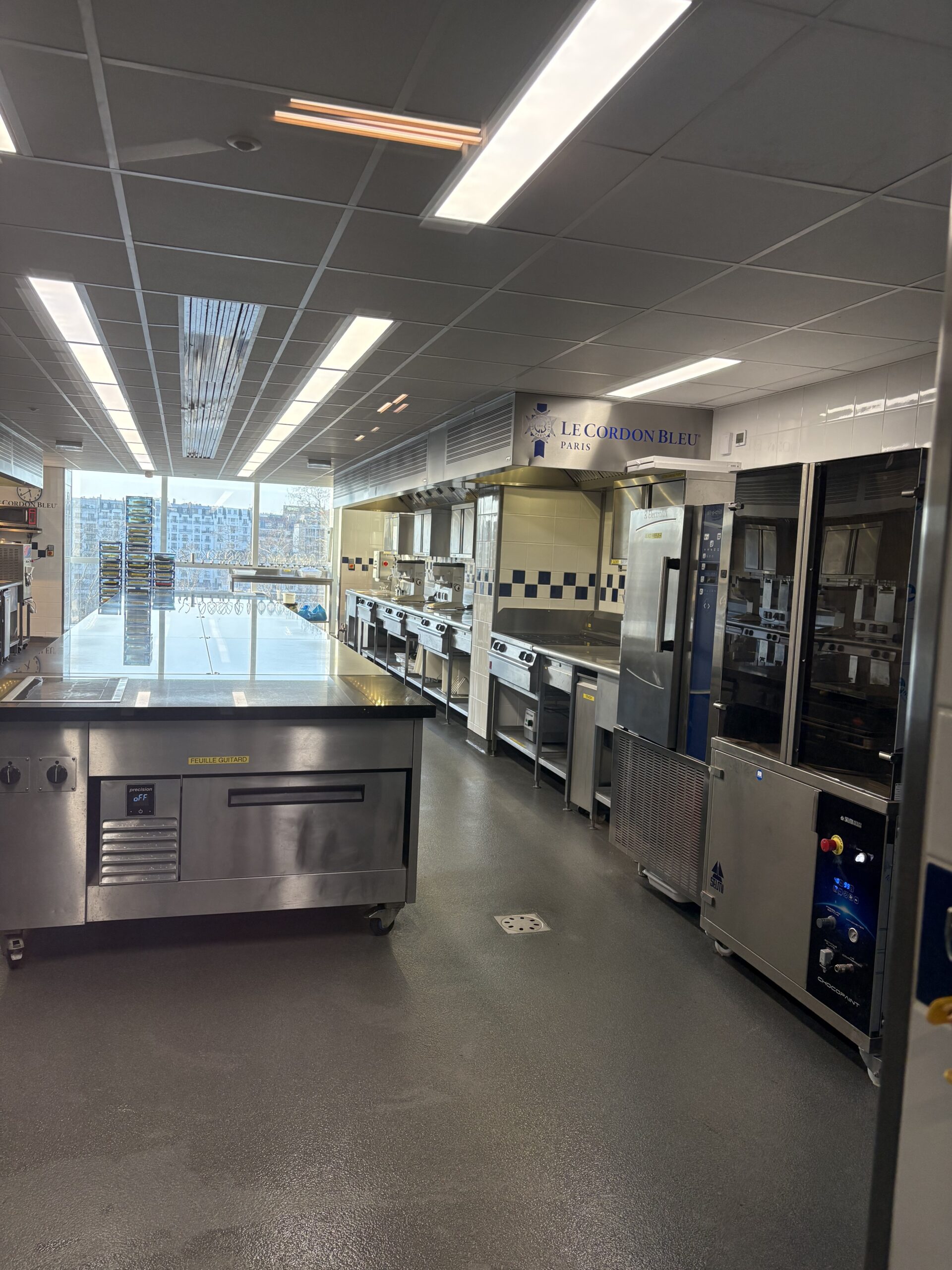
Even the kitchens themselves reflect how exacting this world is. I learned that the temperature of the room changes depending on whether students are working on pastry or cuisine. When cooking at this level, everything matters.
And then there are the chefs. Every single one I heard about brings deep, real-world experience. These aren’t just instructors; they are mentors who live the craft.
Three Types of Programs
As I listened, I realized that not everyone here is chasing the same dream and that is exactly what makes the curriculum so versatile.
Some students are clearly on the path to high-end, professional kitchens. You can almost picture them working in Michelin-starred restaurants one day.
Others are here purely out of passion. They love food, they want to improve, but they are not necessarily planning to turn it into a career. That is a completely valid path here.
Then there are the future entrepreneurs—the ones already thinking about opening their own bakery, café, or restaurant. The school doesn’t just teach them how to cook; it helps them think like business owners.
I loved that this range exists because regardless of the intended outcome, everyone has a passion for cooking.
So Many Paths to Choose From
The structure of the programs reflects that flexibility. There are the classic diplomas—Cuisine and Pastry, each lasting 6 or 9 months, and a shorter Bakery diploma. Then there’s the Grand Diplôme, which combines both cuisine and pastry for a more comprehensive experience.
But what really caught my attention were the opportunities beyond the classroom. Some programs include internship pathways where students move from learning, to practicing within the school’s cafe, to working internationally.
There are also specialized programs. Plant-based gastronomy, for example, shows how the school is evolving with the times. There’s also a wine and management program that blends culinary knowledge with business insight.
Learning to Lead, Not Just Cook
One of the most interesting parts of my visit was hearing about the business side of things. Students can add Culinary Management to their training, gaining real insight into what it takes to actually run a food business.
Even more impressive is the bachelor’s program offered in partnership with Paris Dauphine University. It’s a three-year Culinary Design Management degree, taught in English, with a small cohort of about 30 students.
What stood out to me wasn’t just the academics — it was the intention behind it. This program is designed for people who want to lead the future of the culinary world. It includes an internship midway through and a placement in London at the end. It’s not just about mastering technique; it’s about shaping a career.
Walking Away Inspired
By the time I left Le Cordon Bleu, I kept thinking about how thoughtfully everything is designed. From the small class sizes to the range of programs to the global student body. It all works together to create something much bigger than a cooking school. It’s a place where people come with different goals but leave with something in common: a deeper understanding of their craft and a clearer sense of where they’re headed.
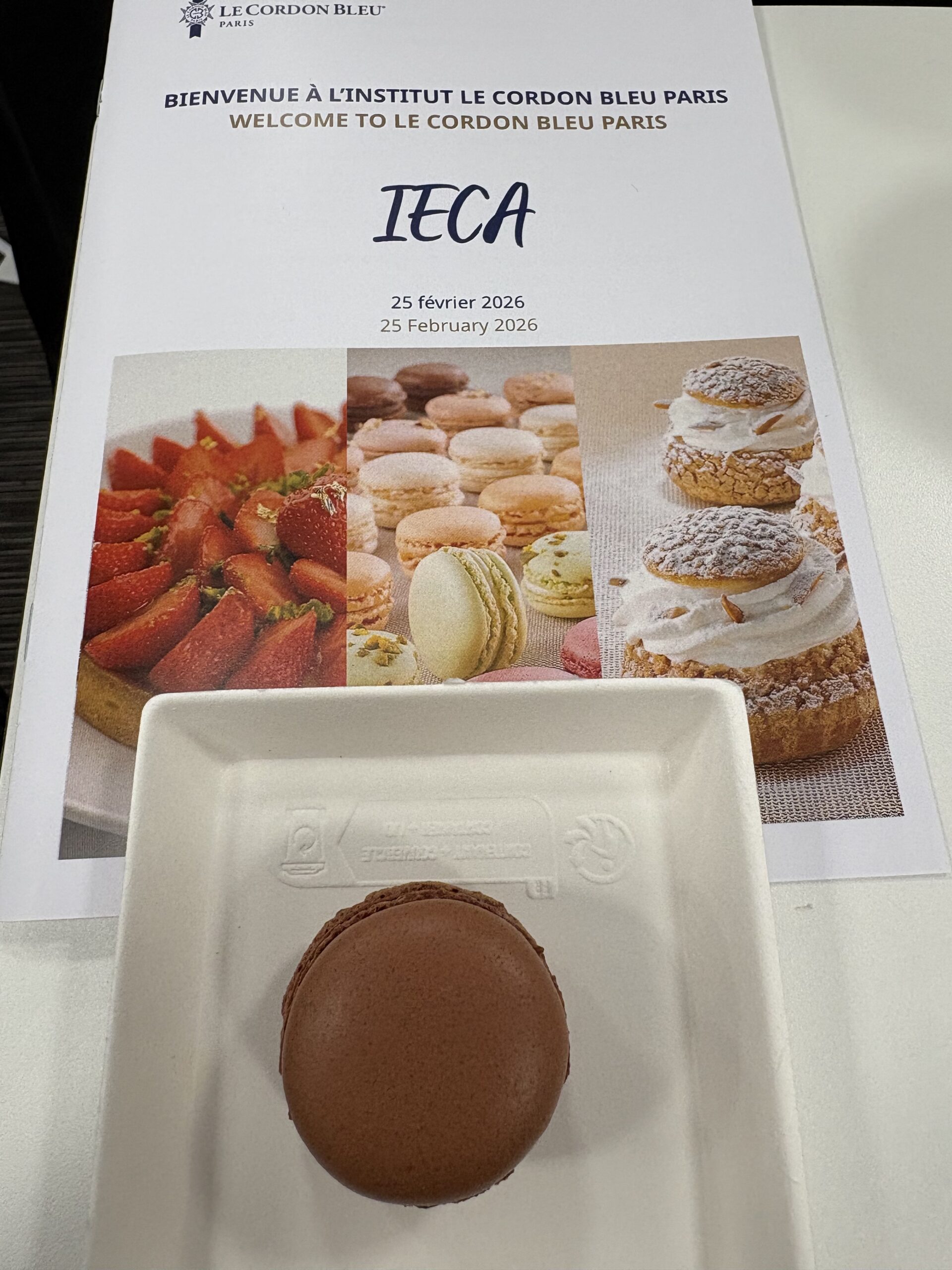
It didn’t hurt that we were offered the most delicious bread right out of the oven while we watched a macaron demonstration (and then were treated to chocolate ganache macarons!).